A beach wedding dress is a dress light enough to be worn in heat, cut so the hem moves over sand instead of dragging through it, and made in a fabric that behaves in wind rather than fighting it. That is a definition by behaviour rather than by look, and it is the useful one. Plenty of dresses look right in a beach photograph and are miserable to wear on one for three hours in July. This guide sets out the fabrics that survive sand, wind and heat, the silhouettes that move, the hem and shoe decisions that go together, what happens to a veil in wind, why the shade of ivory matters at sunset, and how to get the dress to a destination wedding in one piece.
What makes a wedding dress suitable for a beach?
Four things: weight, breathability, the hem and how the fabric behaves in wind. Weight first, because a heavy dress on soft sand tires you within minutes and holds heat against the body. Breathability next, because a fabric that lets air through is the difference between comfort and a damp lining by the end of the vows. The hem, because a floor-length hem that is perfect on a hotel carpet drags through sand, collects it in the lining and turns dark at the tide line. And wind, because a beach is rarely still: a fabric that lifts and falls softly looks like the photographs you have in mind, and a fabric that either billows uncontrollably or stands rigid does not. A dress that scores well on all four can be lace, chiffon or cotton, sleeved or not. One that scores badly on two of them will be a problem however it looks on the hanger.
Which fabrics survive sand, wind and heat?
Chiffon is the best all-round beach fabric and mikado the worst. The table rates the six fabrics brides ask about most on the four things that matter on sand. The fabrics guide describes each fabric in general terms; this is how they behave on a beach specifically.
| Fabric | Heat | Wind | Sand | Creasing |
|---|---|---|---|---|
| Chiffon | Cool; breathes | Lifts and falls softly; needs a lining or slip with a little weight | Sheds sand; dries fast if the hem gets wet | Creases little; steams out in minutes |
| Soft tulle | Cool | Billows; layers can wrap round the legs | Traps sand between the layers | Creases little but the layers crush in a case |
| Crepe | Warm; heavier and close to the skin | Stays put | Fine sand brushes off; wet sand marks | Creases at the seat and hip in transit; steams out |
| Cotton lace | Cool; breathes | Steady; too heavy to lift | Holds sand in the pattern; brushes out when dry | Creases and needs pressing, not only steaming |
| Satin | Hot; does not breathe | Steady | Shows every mark; sand scratches the surface | Creases sharply and shows every fold |
| Mikado | Hot; structured | Stands away from the body | Shows marks; a heavy hem drags | Creases hold; hard to steam out on site |
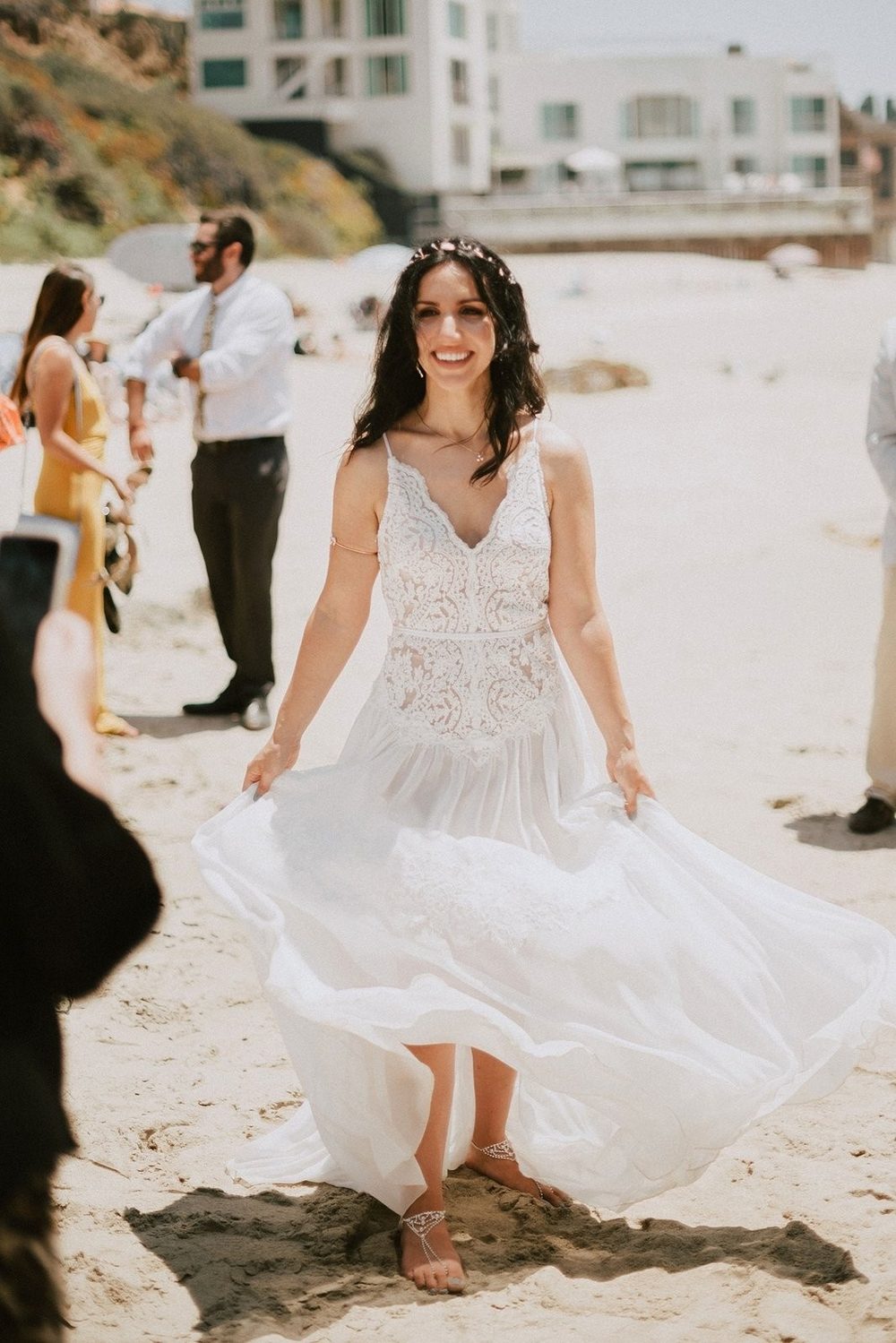
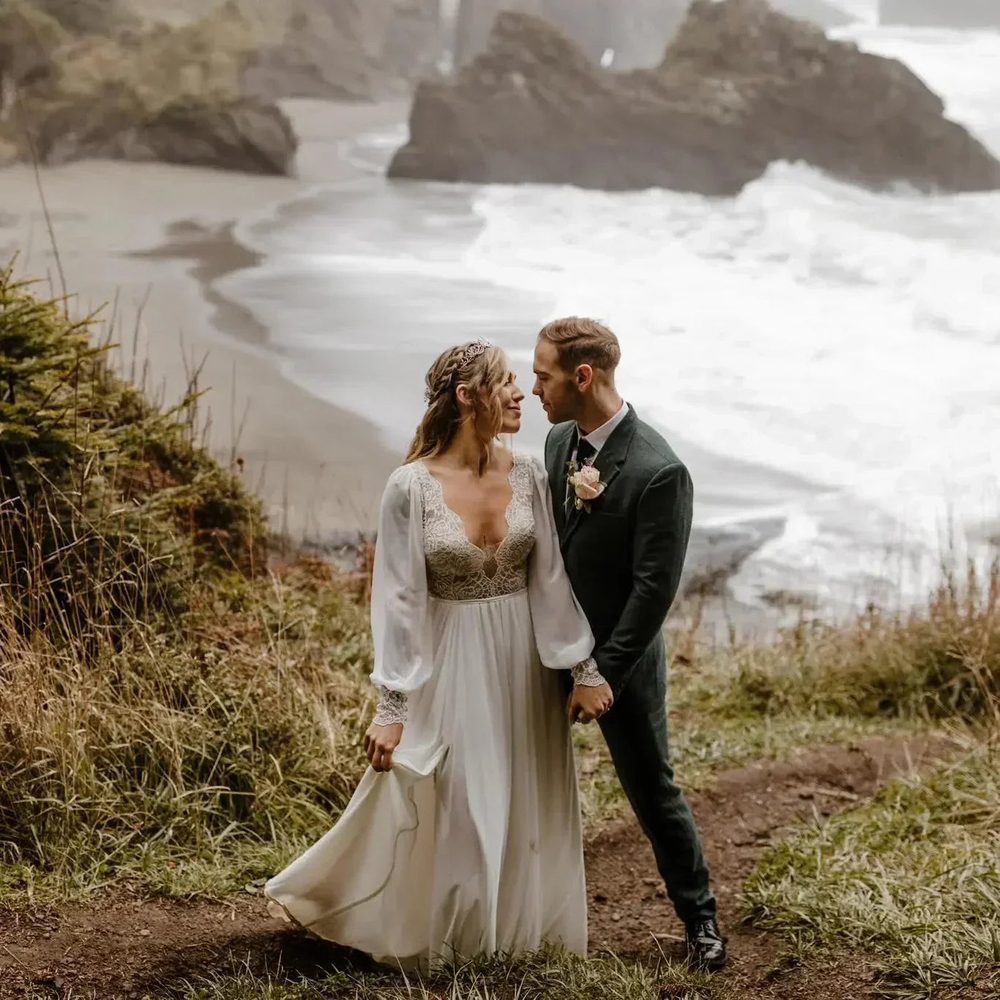
The combination that appears in most beach dresses is a lace bodice over a light lining with a chiffon skirt: the lace gives structure and pattern where the dress needs it, and the chiffon does the moving.
Which silhouettes work on a beach, and which struggle?
A-line, sheath, empire and two-piece work; ball gown and mermaid struggle. The A-line is the safest: fitted to the waist, then a skirt that widens gently and clears your feet with every stride. The sheath, in crepe or chiffon, is the coolest and the simplest to pack, and it needs a slit or enough width at the hem to let you walk on soft sand. The empire, with its seam under the bust, keeps fabric away from the waist and lets air move, which is why it is so often chosen for hot climates. The two-piece, a separate top and skirt, leaves a band of air at the waist and packs flat. The ball gown fails on weight and wind: a full skirt over a petticoat is heavy, it holds heat, and a breeze fills it like a sail. The mermaid fails on stride: it is tightest at the knee, which is exactly where you need freedom to walk on sand, and its flare drags through the sand at the point where the fabric is fullest.
How long should the hem and train be on sand?
The hem should clear the ground when you stand in what you will actually wear on the sand, and the train should be a sweep at most. A standard floor-length hem is set to brush the floor in the wedding shoes; on sand that same hem sinks, drags and darkens at the tide line within a few steps. Ask for the hem to be set a fraction shorter, or for a gentle high-low cut that lifts the front and lets the back trail lightly. Trains collect wet sand, and wet sand is heavy, so a sweep is the sensible upper limit for a ceremony on the beach itself. If you want a longer train for the photographs, make it detachable and put it on for the pictures only. If the ceremony is on the sand and the reception is on a deck or in a hotel, the hem has to be set for one of them, and the sand is the one that matters.
What shoes do you wear on a beach, or none?
Barefoot, flat sandals or a wedge, and choose before the hem is set. Heels sink in sand and are unwalkable, so the usual choices are bare feet, a flat leather or beaded sandal, or a wedge with a wide base for a bride who wants height. Whatever you decide, the hem is fitted to that shoe, so bring the shoe to the fitting or bring nothing and be fitted barefoot. Changing into heels for a reception on a hard floor after a barefoot ceremony lifts the hem by the height of the heel; changing the other way puts the hem on the floor. Pick one height for the day, or accept the compromise knowingly.
Does a veil work in wind?
A long veil in an onshore breeze becomes a sail, so a short veil on a firm comb is the safe choice, or none at all. Fingertip and longer veils lift, twist and pull at the hair for the entire ceremony, and they wrap around the bride and the person beside her in the photographs. A shoulder or elbow-length veil on a wide comb pinned into an updo behaves well in a moderate wind. Many beach brides wear the veil only for the photographs and hold it, or replace it with a comb, flowers or a short piece of lace. If a long veil matters to you for the pictures, ask the photographer to shoot it in the lee of a dune or a wall, where the air is still.
Which shade of ivory looks right in sunset light?
Warm ivory looks right at sunset, and stark white looks colder than you expect. Late afternoon light on a beach is golden and low, and a warm ivory or champagne shade takes that light and looks richer for it. A blue-toned white can read grey in shade and flat in direct sun against pale sand. At midday under a hard sky the difference is smaller, but most beach ceremonies are timed for the hour before sunset, and that is the light to test a swatch in. Ask for swatches, take them outside at the same hour, and decide there rather than under salon lights.
How do you get the dress to a destination wedding?
Carry it on the plane, hang it on arrival, steam it, and order early enough that none of this is rushed. A wedding dress travels as hand luggage in a breathable garment bag, never in the hold. Ask the airline before you fly whether the cabin has a wardrobe, and if not, fold the dress once over a full overhead locker with tissue in the folds. On arrival, hang the dress in a room with air moving and leave it for a day; most creases in chiffon and light lace drop out on their own. Then steam, never iron: a hand steamer, or the dress hung in a bathroom with the hot shower running. Humidity works for you here, since damp air relaxes chiffon, though it makes cotton lace limp, which a steamer fixes. Ordering early is the part that decides whether any of this is calm or frantic, and the wedding dress timeline sets out the dates.
What brides at one studio worried about. Of 156 verified reviews at the studio that publishes this journal, 23% mentioned shipping or arrival timing, which is the practical worry for a destination wedding: order early enough that the dress is in your hands before you travel, not shipped to the venue.
What to ask before you order
- How much does this dress weigh, and can I hold it for a minute?
- Which fabric is the skirt, and how does it behave in wind?
- Can the hem be set for bare feet or the sandal I will wear on sand?
- Is the train a sweep, and if longer, can it be made detachable?
- How should I pack this dress for a flight, and how do I steam it on arrival?
- When will the finished dress be in my hands, and how long before I fly is that?
The fabrics guide describes chiffon, crepe, lace and the rest in more depth, and the wedding dress timeline sets out how far ahead to order so the dress is finished before you travel. To see chiffon and lace on finished dresses made for sand and heat, the studio that publishes this journal keeps its beach wedding dresses in one collection.