Two words appear on almost every bridal site, and they are used as if they were interchangeable. They are not. A vintage wedding dress is a dress that deliberately revives the look of a specific period, most often the 1920s, 1930s, 1950s or 1970s, through its lace, sleeves, neckline and cut. A classic wedding dress is the opposite strategy: a dress that avoids period signals altogether so that it looks right in any decade, including the one your photographs will be viewed in.
This guide defines both, sets out where they differ, shows which laces and silhouettes push a dress one way or the other, and ends with how to choose between them, or combine them, without ending up in costume.
What is a vintage wedding dress?
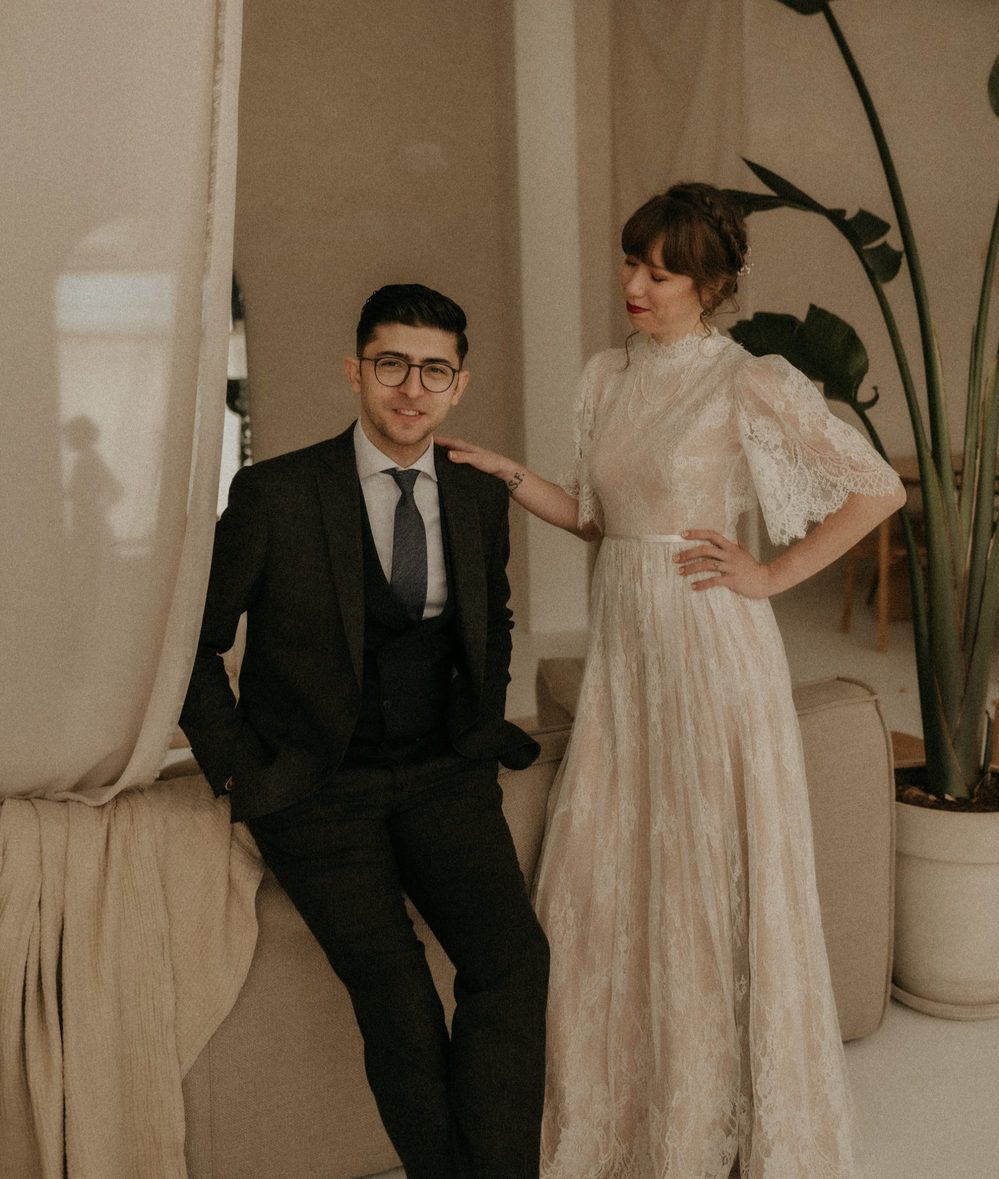
A vintage wedding dress is a new dress designed to evoke a particular era. In bridal, the word almost never means an antique garment; it means vintage-style. The era is carried by a handful of details that brides recognise even without knowing the decade: a high neck with a lace yoke, bishop or bell sleeves, a scalloped lace edge at the hem or cuff, covered buttons running down the spine, a dropped waist, a bias-cut satin that skims the body, or a tea-length skirt.
What makes a vintage dress work is restraint in the selection. One or two era signals on an otherwise wearable base read as vintage. Five or six read as fancy dress. The lace matters more than anything: a fine Chantilly, a corded Alençon or a cotton guipure carries period character on its own, which is why so many vintage-style dresses are built around the lace first and the silhouette second. Our guide to lace types explains each of those laces.
What is a classic wedding dress?
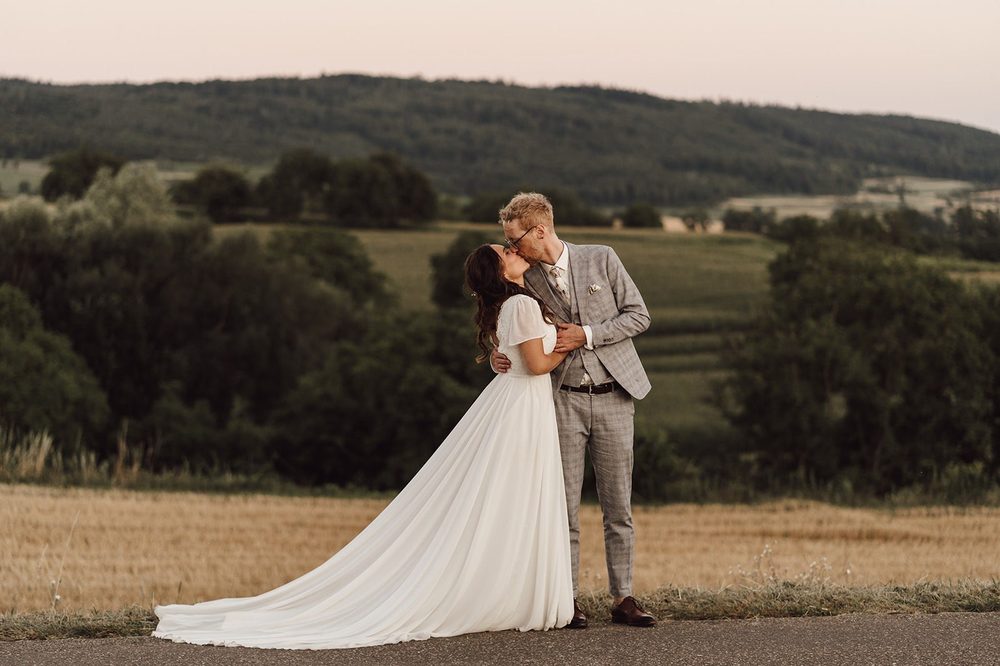
A classic wedding dress is built to look correct in any era. It achieves this by leaving out the details that date a dress: no statement sleeve, no period lace pattern, no dropped or empire waist, no visible embellishment beyond the fabric itself. What remains is silhouette and cloth. The silhouettes are the ones that have not changed in seventy years: the A-line, the ball gown, the fitted sheath. The fabrics are smooth or finely textured: satin, mikado, crepe, a plain soft tulle, or a lace so fine and evenly patterned that it reads as texture rather than as a motif.
The classic dress is often described as safe, and that undersells it. Because there is nothing to hide behind, cut and fabric quality are fully visible. A classic crepe sheath that is well cut is one of the most demanding dresses to make, and one of the most elegant to wear. The silhouettes guide covers the shapes that carry it.
How do vintage and classic wedding dresses differ?
The difference is not the silhouette, which both can share, but the details layered on it. Vintage adds era signals; classic subtracts them.
| Vintage-style | Classic | |
|---|---|---|
| Aim | Evoke a specific period | Look right in any period |
| Lace | Chantilly, Alençon, guipure with a recognisable pattern | Fine, even lace as texture, or no lace |
| Sleeves | Bishop, bell, cap, illusion lace to the wrist | Sleeveless, straps, or a plain fitted sleeve |
| Neckline | High neck, bateau with lace yoke, sweetheart with lace overlay | Straight strapless, plain V, bateau in plain fabric |
| Waist | Natural, dropped (1920s) or empire (1970s) | Natural |
| Fabric | Lace over lining, bias satin, cotton, crinkled chiffon | Satin, mikado, crepe, plain tulle |
| Embellishment | Covered buttons, scalloped edges, small pearls | Little or none |
| Skirt | Tea-length, columns, soft A-lines | A-line, ball gown, sheath, with or without train |
| How it dates | Anchors the photographs to the chosen era | Does not date |
| Risk | Costume, if too many signals stack | Plainness, if the cut is ordinary |
Which decades define vintage wedding dress styles?
Four decades supply nearly all vintage bridal references, and each one is recognisable by two or three details.
| Decade | Signals | Modern translation |
|---|---|---|
| 1920s | Dropped waist, straight column, beaded or fringed hem, art deco lines | A beaded sheath with a lowered waistline |
| 1930s | Bias-cut satin, cowl neck or cowl back, long sleeves, minimal lace | A silk or crepe slip dress with a draped back |
| 1950s | Tea length, sweetheart neckline, full circle skirt, lace bolero | A knee- or mid-calf lace dress with a full skirt |
| 1970s | High neck, bishop sleeves, cotton lace, empire or natural waist, crochet | A boho lace dress with sleeves and a soft skirt |
The 1970s reference is the one most brides mean today when they say vintage, and it overlaps almost entirely with what is now sold as boho. If that is the look you have in mind, the boho wedding dress guide is the more precise starting point.
Which fabrics and laces make a dress read vintage?
Lace decides it more than any other element. A fine Chantilly with a scalloped edge, a corded Alençon with dense floral motifs, or a cotton guipure with bold open flowers each carry a period on their own, and a plain A-line becomes vintage the moment one of them is used for the bodice and sleeves. By contrast, a modern embroidered tulle with scattered leaves or geometric lines reads as contemporary even on a 1950s silhouette.
After lace, fabric behaviour matters. Bias-cut satin that clings and drapes is 1930s. Crinkled or tiered chiffon and unlined cotton are 1970s. Smooth mikado, heavy satin and structured tulle are classic, because they hold a line without telling a story. Ivory and warmer shades also read older than stark white; the ivory versus white guide explains why the shade shifts the mood of a dress before any detail does. The studio that publishes this journal keeps a short vintage bridal lace guide with swatches of the laces named here, and its vintage lace wedding dresses show the same laces made up into finished gowns.
How do you choose between vintage and classic?
Choose by three things: the setting, the photographs you want in thirty years, and how much detail you can wear comfortably.
The setting. Vintage-style dresses sit naturally in old buildings, gardens, barns and small ceremonies, where the period detail has something to talk to. Classic dresses suit formal venues, long aisles and city weddings, where a strong line matters more than texture.
The photographs. A classic dress will look the same in the album in three decades. A vintage-style dress anchors the album to the year you chose that era. Some brides want exactly that; others realise, standing in a 1970s lace dress, that they would rather not. Decide this before the appointment.
Your tolerance for detail. Vintage asks you to carry lace, sleeves and a neckline all at once. If you prefer to be the focus rather than the dress, classic is the honest answer.
Can a wedding dress be both vintage and classic?
Yes, and it is the most common request in a made-to-measure studio. The method is one era signal on a timeless base. A classic A-line in a vintage French lace. A clean crepe sheath with a single 1930s cowl back. A plain ball gown with 1950s cap sleeves and nothing else. The base keeps the photographs from dating; the single detail gives the dress a character that a plain classic sometimes lacks.
The mistake in the other direction is just as common: a vintage lace, a high neck, bishop sleeves, covered buttons and a tea-length hem on one dress. Each is lovely. Together they are a costume. If a salon or designer suggests removing one, they are usually right.
What brides at one studio chose. Of 156 verified reviews left for the studio that publishes this journal, 24 (15%) were for dresses in its vintage lace line, and the other 85% were for boho and lace-and-chiffon designs that borrow a single vintage element, most often a sleeve, on a soft contemporary base. Almost nobody ordered a full period reproduction. The "one signal on a timeless base" approach is what brides actually buy, not only what designers advise.
Is a genuine antique wedding dress a good idea?
Sometimes, with eyes open. An original dress from the 1930s or 1950s brings fabric and workmanship that cannot be reproduced, and a story. It also brings three problems. The fabric is fragile: old silk shatters along folds, and old lace tears at the seams, so the dress may not survive a fitting, let alone a wedding. The sizing is historical: dresses were cut for corseted figures, and there is rarely a seam allowance to let out. And alterations are risky, because a seamstress cannot replace a thread that no longer exists.
If you have a family dress, have it assessed by a conservator or a seamstress who works with antique textiles before you plan around it. Often the answer is to use its lace or its buttons on a new dress, which keeps the story and loses the risk. The cleaning and preservation guide explains how such fabrics should be stored in the meantime.
What should you ask before ordering a vintage-style dress?
- Which era is this dress referencing, and which details carry it? If the maker cannot name them, the dress is a mood rather than a design.
- Is the lace on the sample the lace my dress will be made from, and can I keep a swatch?
- How many era details are on this dress, and which one would you remove first?
- Will the lace be lined, and in what shade? Vintage laces over a nude lining read as sheer; over ivory they read as solid.
- Does the silhouette move? Bias-cut and dropped-waist dresses restrict differently from an A-line.
- What will this look like in photographs in thirty years? Ask the maker to answer honestly.
The twelve questions for any dress purchase apply on top of these.
If the vintage look you want is the 1970s one, with sleeves and soft lace, read the boho wedding dress guide next. If it is the lace that draws you rather than the era, the lace types guide will help you name it. To see period details on finished dresses, the studio that publishes this journal keeps its vintage lace dresses and classic dresses in separate collections.