Open Pinterest for the first time and you meet the same words on every pin: A-line, mermaid, trumpet, ball gown, sheath. They sound like a salon's private code. In practice they describe five or six basic shapes, and each shape does something specific and predictable to a body. A silhouette is the outline of the dress, set by where it is fitted and where the skirt starts to flare. Once you know what that is, two things get easier: explaining what you want at an appointment, and understanding why a dress that looked perfect in a photograph did nothing for you in the mirror.
This guide takes each silhouette in turn: what it is, what it does, where it is comfortable and where it is not, and who tends to choose it. At the end there is a short table for taking to your first appointment.
What is a wedding dress silhouette?
A silhouette is the outline of the dress, and the outline is decided by two things: where the dress is fitted to the body, and where it stops being fitted and starts to flare. Everything else, the neckline, the sleeves, the lace, the train, is decoration on top of that outline. It is why a plain crepe A-line and an A-line covered in Chantilly lace are, structurally, the same dress.
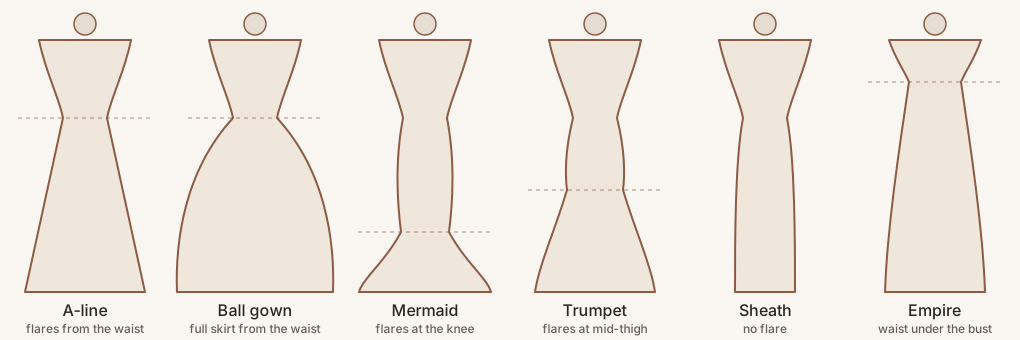
It also means silhouette should be the first decision, not the last. Neckline and fabric can be changed on most dresses. The point where the skirt flares usually cannot.
A-line
Fitted through the bodice, then flaring gradually from the natural waist to the hem, like the letter A. The skirt neither clings to the hips nor stands away from them. It simply falls.
What it does. Lengthens the leg, defines the waist, and glides over the hips without emphasising them. It is the most forgiving silhouette there is, which is why nearly every salon starts you in one.
Comfort. Excellent. You can walk, sit, dance and climb stairs without thinking about the dress. The skirt has volume but no structure underneath, so it is light.
Who chooses it. Brides who want to feel like themselves, who are marrying outdoors, or who have not yet worked out what they want and need a safe first fitting. Its only real drawback is that it is safe. Brides looking for a dramatic entrance sometimes feel something is missing.
Ball gown
A fitted bodice and a full, structured skirt that begins at the waist. This is the dress from the stories.
What it does. The skirt hides the hips and legs entirely, balances broad shoulders or a full bust, and makes any waist look small by contrast. It is the silhouette of formal venues, long aisles and big photographs.
Comfort. This is where honesty matters. A ball gown is heavy. Several layers of tulle over a stiff petticoat or crinoline add up to a weight you will feel by the end of an evening of dancing. Sitting in one takes practice, and bathroom logistics are a genuine consideration. If you choose a ball gown, ask what the underskirt is made of and how much it weighs. Modern construction with lighter tulle and no hoop is far more wearable than the traditional version.
Who chooses it. Brides who want the moment, who are marrying in a cathedral or a grand hall, and who are happy to trade some ease for presence. It suits petite brides less well unless the layers are kept light, because the volume can shorten the frame.
Mermaid
Fitted from the bust through the waist, hips and thighs, and flaring only at or below the knee. The word that describes it best is sculpted.
What it does. Shows every curve, which is entirely the point. Brides who like their bodies and want to show them feel extraordinary in a mermaid. It reads as glamorous rather than romantic.
Comfort. Limited, and you should know that before you fall for one. Walking is a shorter stride. Sitting requires arranging the skirt. Stairs need a hand. Dancing is possible but not free. Two things help: a flare that starts slightly higher than the knee, and a fabric with a little stretch, such as a crepe or a stretch satin. A mermaid in stiff mikado with a knee-level flare is the least mobile dress you can buy.
Who chooses it. Brides with a defined waist and hips who want drama in the body rather than in the skirt. It is also the silhouette most often regretted by brides who chose it for the photographs and then could not enjoy the party. Try walking, sitting and dancing in it at the fitting.
Trumpet
The mermaid's more practical sibling. The dress is fitted through the bodice and hips, but the skirt begins to open around mid-thigh rather than at the knee.
What it does. Gives the same long, sculpted line as a mermaid with much more room to move. Many brides who tried a mermaid and panicked at the restriction find the trumpet is exactly the compromise they wanted.
Comfort. Good. Not as free as an A-line, but walking and dancing are natural.
Who chooses it. Brides drawn to the fitted look who intend to dance. If you are torn between a mermaid and a trumpet, the trumpet is almost always the better wedding-day decision.
Sheath (column)
Falls straight from the shoulders or bust to the hem, without a flare. Close to the body without gripping it.
What it does. Creates a clean, modern, uninterrupted line. It reads as understated and architectural, and it suits intimate weddings, city weddings and registry offices particularly well.
Comfort. Very good, provided the fabric has some give or there is a slit. A sheath in a fabric with no stretch and no slit can make stairs awkward.
A warning on construction. Because there is nothing to hide behind, a sheath exposes every seam and every ripple in the fabric. Cut and fabric quality matter more here than in any other silhouette. A well-made crepe sheath is one of the most elegant dresses there is. A poorly made one shows everything.
Who chooses it. Brides with a narrow or athletic frame, brides who dislike fuss, and brides who want a dress that looks like something they might wear again in another colour.
Empire
The waistline is raised to just under the bust, and the fabric falls loosely from there.
What it does. Draws the eye upward, skims the stomach and hips, and creates a soft, unstructured, slightly Grecian line. It is the natural choice for pregnant brides, for anyone who wants to soften the midsection, and for a bohemian or beach wedding.
Comfort. The most comfortable silhouette of all. Nothing is fitted below the bust.
Fabric matters. Empire lines look wonderful in fluid fabrics, chiffon especially, and poor in stiff ones. A structured satin empire tends to look like a tent. If you like the silhouette, expect to be steered toward soft fabrics.
Who chooses it. Pregnant brides, brides with a short torso who want to lengthen the leg line, and anyone whose wedding is outdoors in warm weather.
Where does the skirt flare start, and why does it matter?
If you take one thing from this guide, make it this. The single most important measurement in a fitted dress is the point where the skirt stops being fitted and begins to open. On a mermaid it is at or below the knee. On a trumpet it is mid-thigh. On an A-line it is the waist. On a ball gown it is the waist, with structure added.
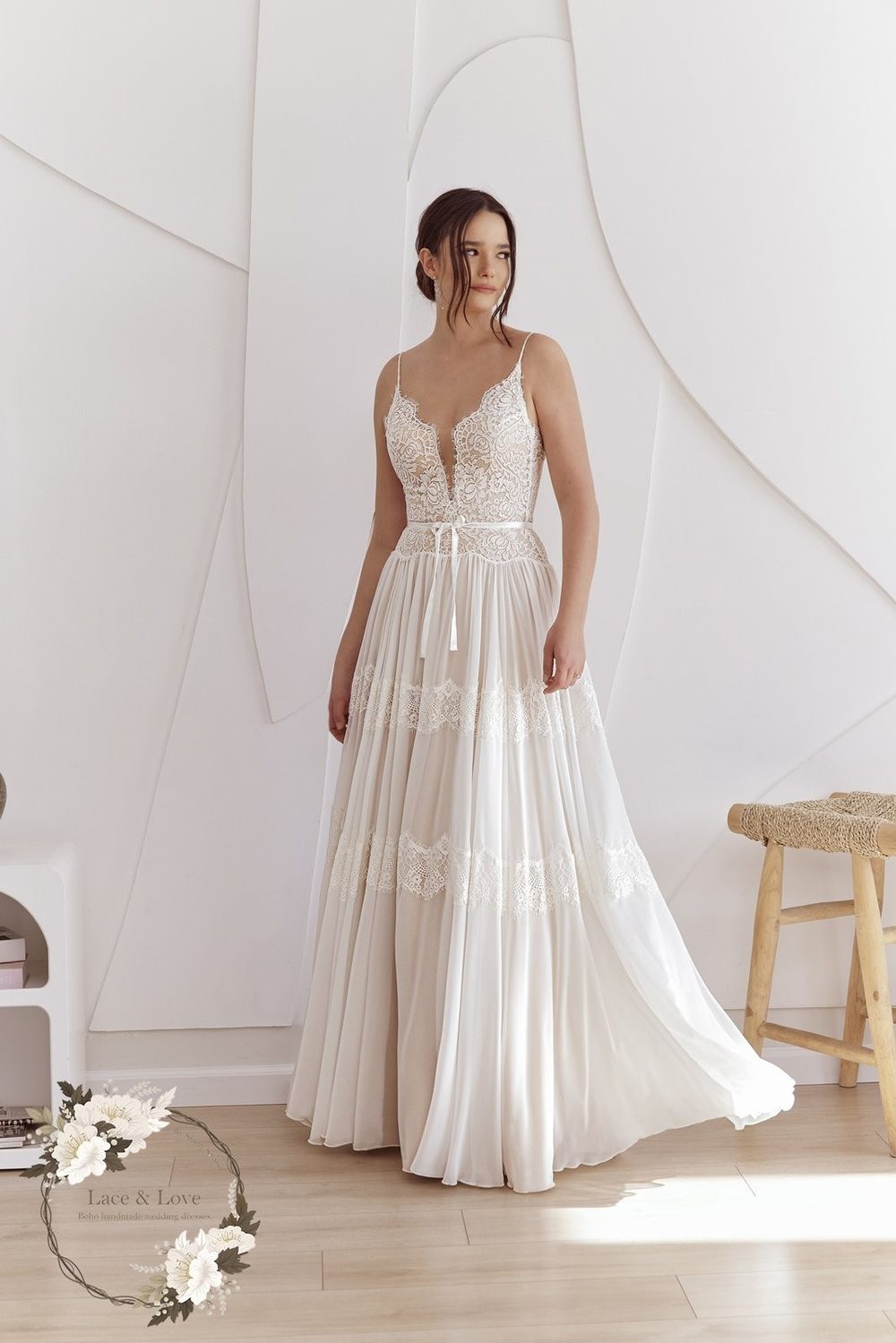
Two dresses can share a name and feel entirely different because of a few centimetres in that point. A designer working made-to-measure can place it exactly where it suits your leg length and your plans for the evening. In a ready-to-wear dress it is fixed, and the question to ask is whether the flare can be raised or lowered in alterations. Often it cannot.
A table for the first appointment
| What matters most to you | Start with |
|---|---|
| Comfort and freedom to dance | A-line, empire, trumpet |
| A defined, small-looking waist | A-line, ball gown |
| Showing curves | Mermaid, trumpet |
| A minimal, modern line | Sheath |
| Pregnancy, or softening the midsection | Empire, soft A-line |
| A dramatic entrance | Ball gown, mermaid |
| An outdoor or beach wedding | A-line, empire, sheath |
How do you use this at a first appointment?
Choose three silhouettes: two you expect to like and one you are sure you will not. Try all three. Walk to the far end of the room and back. Sit down. Raise your arms as if hugging someone. Bend forward as if picking something up.
Then ignore the photograph in your head and ask a plainer question: in which of these did I forget about the dress?
Brides are often certain they are "not a ball gown person" until they stand in one, and equally certain they want a mermaid until they try to sit. The surprise almost always comes from the third dress. That is why you bring it.
Silhouette and fabric are two halves of one decision. The same A-line in tulle and in satin are two different dresses. Our guide to wedding dress fabrics covers what each material does to a silhouette. And if you are working out which shapes suit your particular proportions, the body shape guide takes a less prescriptive approach than most.