Boho is the most requested word in bridal and the least agreed upon. To one bride it means bare feet, a flower crown and a crochet dress on a beach. To another it means a bias-cut silk slip with one long sleeve of Chantilly, worn in a city registry office. Strictly, a boho wedding dress is a soft, unstructured dress in a textured fabric with one storytelling detail, such as a long sleeve or an open back. Both are right, and the salon that hears "boho" cannot know which one you mean.
This guide sets out what the word actually describes, what only looks like it, the three directions it goes in, the fabrics that make it work, and how to keep the result on the side of a dress rather than a costume.
What defines a boho wedding dress?
Strip the styling away and a boho dress has three traits. A dress that has all three is boho whatever the fabric. A dress with only one of them usually is not.
A soft, unstructured cut. The dress follows the body rather than shaping it. There is no boned corset, no stiff petticoat, no built-in shaping beyond a light lining. Waistlines are natural, raised or absent. Skirts fall rather than stand. The silhouettes that suit this are the sheath, the empire, the soft A-line and, at a stretch, a loosely fitted trumpet in a fabric with give. Our silhouettes guide covers what each of those does.
Textured fabric. Boho dresses are rarely smooth. Lace with visible pattern, crinkled chiffon, cotton with a slub, crepe with a matt hand, embroidery with a raised surface. The texture is what stops the softness from looking plain.
One storytelling detail. A long sleeve, an open back, a fringe, a deep V, a row of covered buttons, an embroidered hem. One. The detail is what people remember and what makes the dress yours. When there are three or four, the dress starts to describe a character instead of a bride, which is where costume begins.
What is not boho?
A lace dress is not automatically boho. A corded Alençon mermaid over a structured corset is formal, however much lace it carries. The cut decides, not the fabric.
A simple dress is not automatically boho. A plain crepe sheath with a bateau neck is minimalist. Without texture or a detail it reads as modern, not bohemian.
A beach dress is not automatically boho. A short, bright, printed sundress is a beach dress. Boho is a way of cutting a dress, not a location.
Accessories do not make it. A flower crown on a ball gown is a ball gown with a flower crown.
If a dress needs the styling to read as boho, the dress is something else.
The three sub-styles
The three boho sub-styles are romantic, clean (or urban) and free-spirited. The word covers three directions that share the traits above and differ in mood. Knowing which one you mean shortens the appointment considerably.
Romantic boho
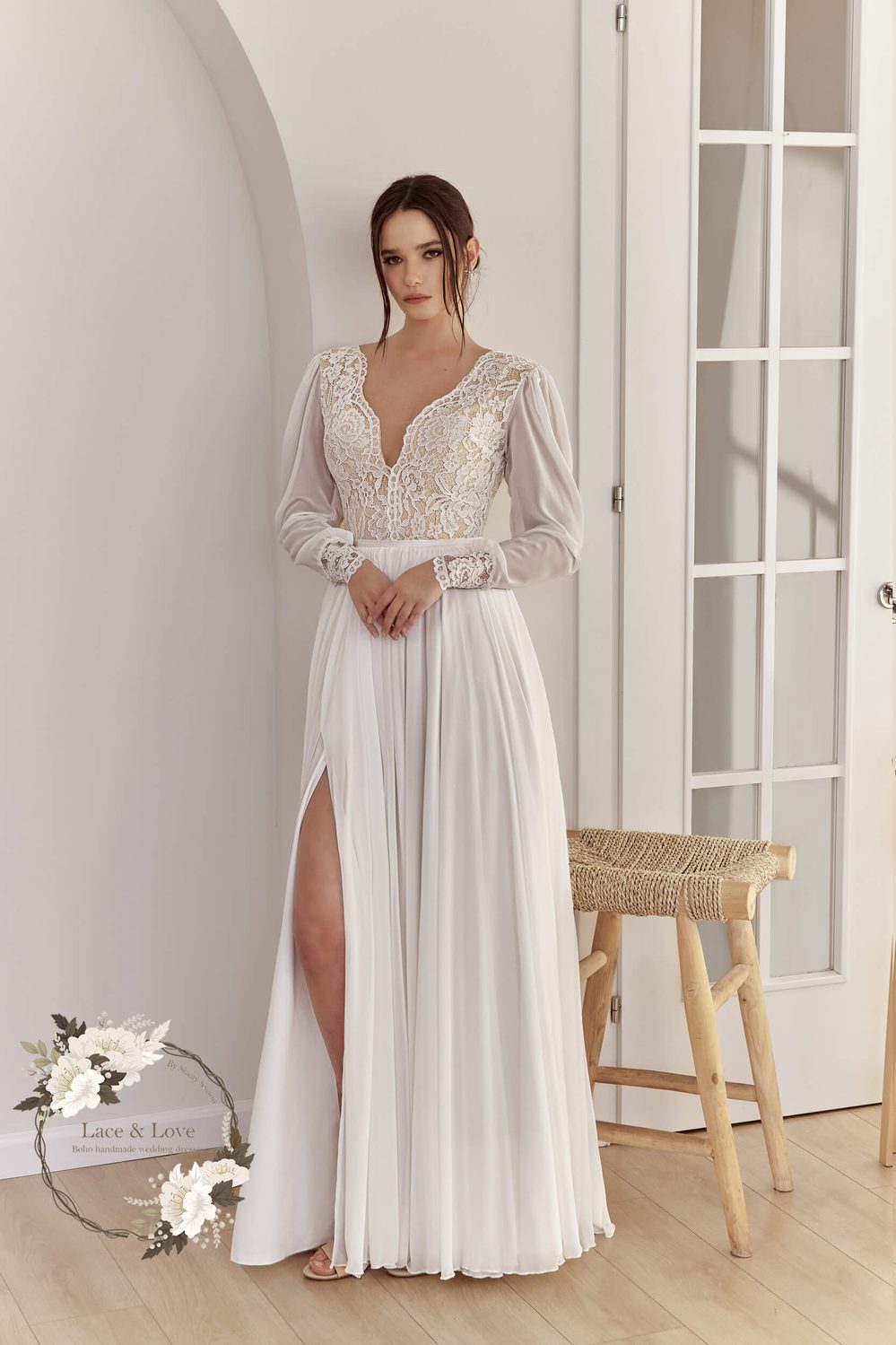
The version most people picture. Soft lace, usually Chantilly or a fine embroidered tulle, over a nude or ivory lining; long or bell sleeves; a V or scoop neckline; an open or buttoned back; a slight train. The silhouette is an empire or a soft A-line. The mood is Edwardian, pastoral, slightly vintage. It suits gardens, barns, woodland and warm evenings. Its risk is sweetness: too much lace, too many ruffles and a flower crown together tip it toward fancy dress.
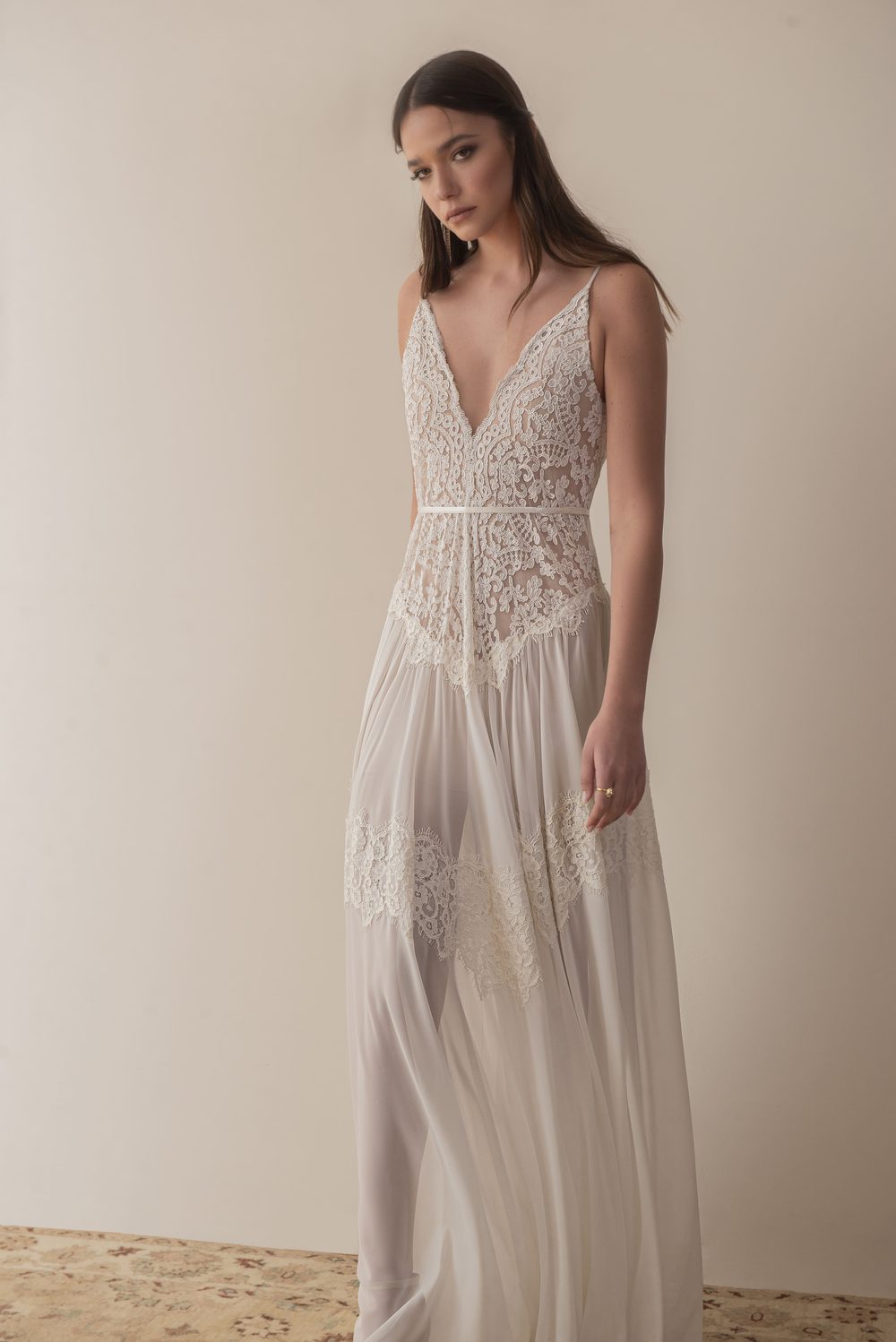
Clean or urban boho
The version for brides who like the softness but not the sentiment. A bias-cut crepe or silk slip, a cowl neck, a single detail such as one lace sleeve, a bare back or a row of buttons to the floor. No visible pattern, or a guipure panel used graphically. The silhouette is a sheath or a very narrow A-line. It suits city weddings, restaurants, registry offices and brides who want to look like themselves at the party afterward. Its risk is that, stripped of its one detail, it stops being boho at all and becomes minimalist, which is fine, but is a different appointment.
Free-spirited boho
The version closest to the word's origin. Guipure or crochet lace, cotton eyelet, fringe, tiered skirts, embroidery in colour, a bare shoulder, perhaps a short hem or a slit. Fabrics are often cotton-based and the dress may be unlined in places. It suits beaches, festivals, small outdoor ceremonies and brides who intend to dance barefoot. Its risk is the highest of the three: with fringe, tiers, embroidery and a crown all at once, the dress becomes a look rather than a gown. Pick two elements and let the rest be plain.
Which fabrics work for a boho dress?
The three traits above depend almost entirely on fabric, and five do most of the work.
| Fabric | What it gives | Sub-style | Watch for |
|---|---|---|---|
| Chantilly lace | Fine pattern, movement, transparency | Romantic | Snags easily; needs a good lining |
| Guipure lace | Bold, graphic texture without a net | Free-spirited, clean | Heavy; sits rather than drapes |
| Chiffon | Fluid fall, lightness, movement in wind | Romantic, free-spirited | Shows every layer beneath; creases |
| Crepe | Matt, weighty drape, a clean line | Clean | Unforgiving of poor cut; warm in heat |
| Cotton (eyelet, voile, lawn) | Crispness, breathability, an informal hand | Free-spirited | Creases badly; can read as daywear |
The lace types guide goes into the differences between Chantilly and guipure in detail, and they matter here more than anywhere, because the lace is usually the texture and the detail at once.
Venue and weather
A boho dress is more exposed to its surroundings than a structured one, because there is less between you and the weather.
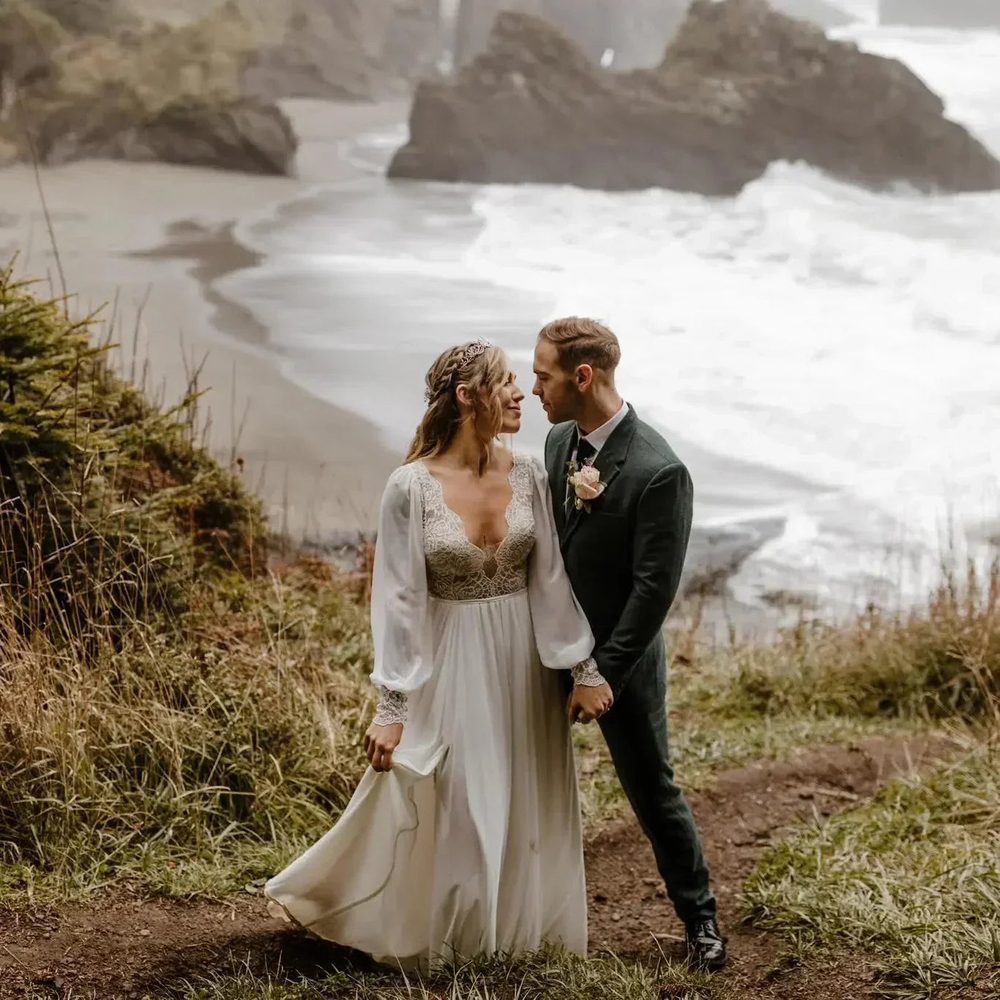
Wind. Chiffon and fine tulle move, which is the point on a hillside and a nuisance on a clifftop. If the ceremony is somewhere windy, a crepe or a lined lace holds its shape; a floating overlay may spend the vows wrapped round your legs.
Heat. Cotton, chiffon and unlined lace breathe. Crepe and heavily lined lace do not, and a long-sleeved lace dress on a hot afternoon is an endurance test. Ask what the lining is made of; a polyester lining under a breathable fabric cancels the benefit.
Ground. Long, soft skirts drag on grass, sand and gravel, and unlined hems pick up everything. A hem that finishes at the ankle, or a bustle for the party, saves the dress. Sand and a tiered skirt is a bad combination; sand and a slim crepe is fine.
Cold. Boho dresses rarely have much fabric. A winter boho wedding needs long sleeves that are lined, or a plan for a wrap or a knitted layer that suits the dress rather than fights it.
Formality of the venue. A free-spirited dress in a grand hotel looks lost, and a romantic lace empire in a warehouse can look precious. The clean sub-style is the most adaptable; the free-spirited one the least.
Questions for the appointment
Bring two or three photographs that represent the sub-style you mean, and be ready to say which one it is. Then ask:
- Which of these dresses is unstructured, and which has a corset or boning I cannot see?
- What is the lining made of, and what colour is it?
- Which single detail on this dress is the one you would keep if you removed everything else?
- How does the skirt behave outdoors? Has this dress been worn on grass or sand?
- Can the sleeves be lined, shortened or removed if the weather changes?
- If I wanted this dress plainer, what would you take away first?
That last question is the useful one. If the answer is a list, the dress is already close to costume. If the answer is "nothing, it is already plain", you have found the right one.
How do you keep a boho dress from looking like a costume?
The rule is subtraction. Choose the cut, choose the fabric, choose one detail, and stop. Accessories follow the same rule: a crown or a long veil, not both; earrings or a statement necklace, not both. The veils and accessories guide covers which veil lengths sit well on soft dresses. A boho dress done well looks like something you might have chosen to wear anyway, on a good day, in a beautiful place. That is the whole idea.
The texture in a boho dress almost always comes from lace, and the two laces that matter most here are very different from each other; the lace types guide explains why. And because the soft, unstructured cut is one silhouette choice among several, the silhouettes guide is worth reading alongside this one. If you want to see the three sub-styles on actual dresses, the studio that publishes this journal specialises in boho and its boho collection covers all three.