A wedding dress is finished by three or four decisions that are usually made at the end, quickly, in a shop, after the hard work is done. Veil, earrings, shoes, perhaps a belt or something for the shoulders. Each one is small. Together they decide whether the dress reads as considered or as covered in things. A veil is a length of tulle worn from a comb in the hair, and its name describes where the hem falls.
The rule that runs through this guide is subtraction. Choose one thing to notice. If the dress is the thing, the accessories should be quiet. If the veil is the thing, the jewellery should be quiet. Two things competing for the eye is where most accessory mistakes come from.
Veil lengths
The six standard veil lengths, from shortest to longest, are birdcage, shoulder, elbow, fingertip, chapel and cathedral. Veil names describe where the hem falls on a bride of average height. On a taller or shorter bride the same veil lands differently, so try them on with the dress rather than ordering from the name.
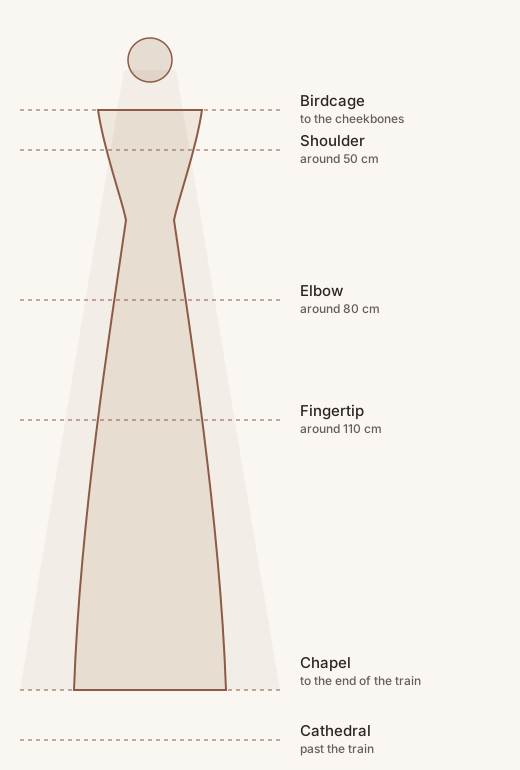
| Length | Where it falls | What it does |
|---|---|---|
| Birdcage | Over the eyes or to the chin | Vintage, city, registry office. Frames the face. No length to manage. |
| Shoulder | To the shoulder blades | Light and informal. Suits short dresses and simple necklines. |
| Elbow | To the elbow | The most wearable length. Frames the bodice without covering the waist. |
| Fingertip | To the fingertips with arms at rest | The most common choice. Covers the back, ends around the hip, works with most silhouettes. |
| Chapel | To the floor, roughly the length of the dress | Formal without a train to manage. Good with a dress that has no train of its own. |
| Cathedral | Beyond the hem, following or extending the train | Drama. Needs a long aisle, a helper, and a plan for after the ceremony. |
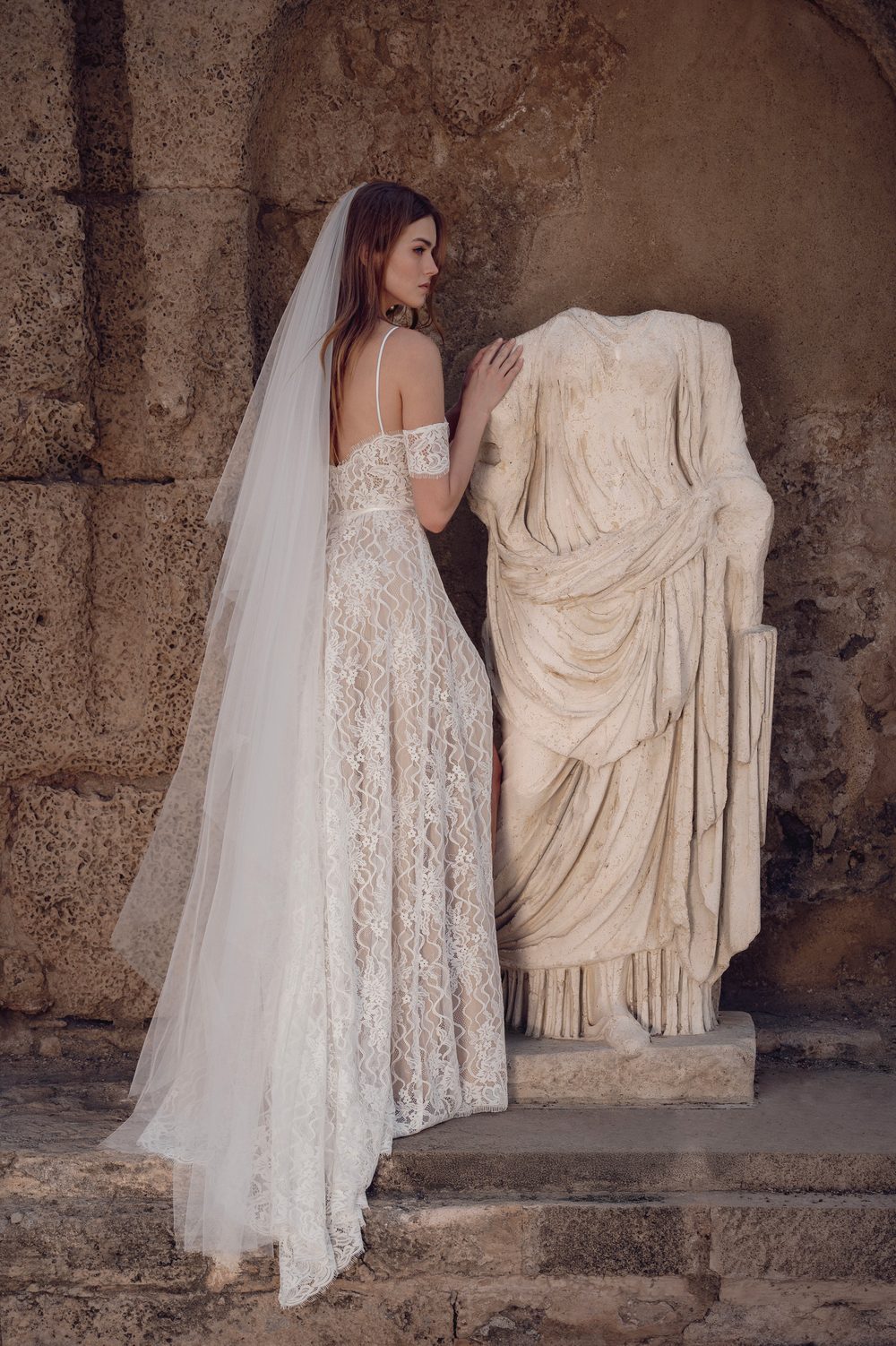
Fullness matters as much as length. A single-tier veil with little gathering falls flat and modern. A two-tier veil with a blusher and a gathered comb reads more traditional. Ask to see both in the same length.
The back of the dress. A veil covers the back for the whole ceremony. If the dress has an open back, a row of buttons or a lace panel you chose it for, consider a veil sheer enough to show it, or a length that ends above it, or no veil at all.
When should you skip the veil, or wear it only for the ceremony?
A veil is not compulsory. It suits some dresses and some brides and not others, and a bride who feels covered rather than finished should leave it off without apology.
The middle path is common: wear the veil for the ceremony and the formal photographs, then remove it before the meal. A cathedral or chapel veil in particular is a hazard at a reception, catching on chairs and being stood on during the first dance. If you take this route, ask the hairdresser how the comb is anchored so it can come out without dismantling the hair. A plain comb, a thin band or a single flower does the job for a bride who wants something in the hair and not a veil.
How do you match the veil to the dress?
Plain veil with a lace dress. If the dress has lace, embroidery or beading, the veil should be plain. Two patterns next to each other fight, and the dress loses.
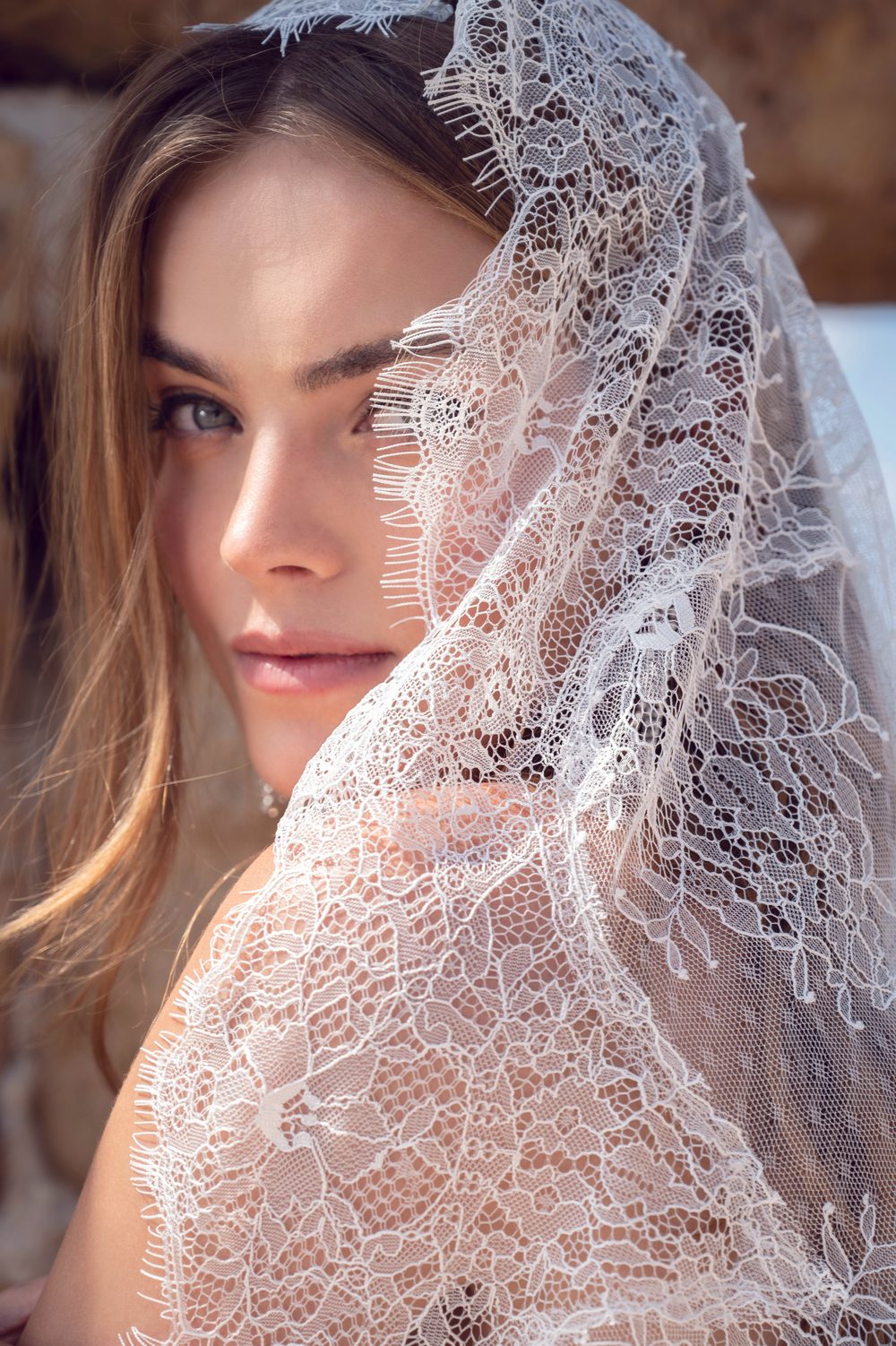
Lace-edged veil with a plain dress. A crepe, mikado or satin dress with no decoration can take a veil with a lace edge or a scattering of beading. The veil supplies the detail the dress does not have.
Match the lace if you do use it. If the veil has lace and the dress has lace, they must be the same lace, or close enough that nobody could tell. Ask whether the maker can edge a veil with the dress's own lace. Our guide to lace types explains why Chantilly next to guipure looks like a mistake.
Match the shade exactly. Ivory is not one colour. There are warm ivories, pale ivories, ivories that lean pink and ivories that lean yellow. A veil in the wrong ivory looks grey or dirty next to the dress. Hold the veil against the dress in daylight before buying, and take a swatch of the dress fabric with you. The ivory versus white guide goes into why this is so hard to judge under shop lighting.
Which jewellery suits which neckline?
The neckline decides the jewellery. As a rule, an open neckline can take a necklace or a noticeable earring but not both, and a covered neckline should have no necklace at all.
| Neckline | What works | What to avoid |
|---|---|---|
| Strapless or sweetheart | A short necklace that sits above the bodice, or drop earrings with a bare neck | A necklace that falls onto the bodice edge |
| Deep V | A pendant that follows the V, or earrings alone | A short, round necklace that cuts across the line |
| High neck or halter | Earrings only, studs or small drops | Any necklace, and large earrings if the neck is covered |
| One shoulder | A single earring on the bare side, or a bracelet on the bare arm | A necklace, which fights the asymmetry |
| Open back | Earrings, and perhaps a back necklace that hangs down the spine | A front necklace with a heavy clasp visible from behind |
| Off the shoulder | Drop earrings; the collarbone is the feature | Chokers, which shorten the neck |
Metal tone and dress colour. Silver, platinum and white gold sit well with pure white and cool ivories. Yellow gold and rose gold sit well with warm ivory, champagne and blush. Put the metal against the fabric in daylight. If the dress has beading or a belt with metal in it, match the jewellery to that metal rather than introducing a second one. Pearls go with nearly everything, which is why they are the default; choose the size by the weight of the fabric.
How do you choose wedding shoes you can stand in all day?
The shoe question is not about looks. It is about six hours.
Height you can stand in. Choose the heel height you can stand in from the ceremony to the last dance, not the highest you can walk in for ten minutes. A block heel or a lower heel with a platform spreads the weight better than a thin stiletto.
The second pair. Many brides change into flats or low sandals for dancing. That is sensible, but the hem must be set for the shoes you wear most, and the seamstress has to know about both pairs. Declare the second pair at the fitting. A hem set for a high heel drags on the floor the moment you change, and a hem set for flats sits high with the heels on.
Heels on grass. Thin heels sink into lawn and gravel. For an outdoor ceremony, choose a block or wedge heel, use heel protectors, or accept a flat.
Break them in. Wear the shoes at home, on carpet, with the stockings you will wear, for several evenings. Stretch the toe box with a shoe stretcher or a thick sock if needed. A blister forming during the speeches cannot be fixed.
Belts, jackets and capes
Belts. A thin belt or sash defines the waist and can change a dress considerably. Use one only if the dress has no waist detail of its own. A belt over a beaded waistband is one thing too many.
Jackets and boleros. Useful for a cold church, a covered-shoulder ceremony or an evening outdoors. Choose one in the same fabric as the dress or in a deliberate contrast such as a soft knit or faux fur. Something that nearly matches looks like an accident.
Capes. A sheer cape from the shoulders does the job of a veil with less to manage, and it suits a dress with an open back better than a veil does. It is also easier to remove for the reception. Capes suit simple dresses and strong shoulders, and can overwhelm a small frame.
A short closing checklist
- One thing to notice: dress, veil or jewellery, not all three.
- Veil shade checked against the dress in daylight.
- Plain veil with a decorated dress; decorated veil with a plain dress.
- Necklace only if the neckline has room for it.
- Metal tone chosen against the fabric in daylight.
- Heel height you can stand in for six hours, both pairs declared at the fitting.
- Shoes broken in at home before the final fitting.
- A plan for removing the veil or cape before the meal.
Accessories only look right if the dress underneath is fitted properly and the shoes were present when the hem was set. The fittings guide explains when each of those decisions is locked in. And if the dress is heavily lace, the lace types guide will help you describe it to a veil maker. For examples of veils cut to match specific dresses, the studio that publishes this journal shows its veils alongside the gowns they were made for.